How sponsorship is evolving from visibility to trust, usage, and access

Sponsorship has long played a role in how brands establish presence and familiarity. For many consumer categories, repeated exposure alone can drive preference. Payments and financial services operate under different conditions. Consumers do not actively seek out payment brands in the same way they seek out products or entertainment. Instead, payment brands are selected under pressure: when money is moving, when risk is perceived, and when failure carries immediate consequences. 

As digital payments scale globally, this dynamic intensifies. According to Statista, global digital payment transaction value is projected to reach $26.9 trillion in 2026. That figure represents trillions of individual decisions carrying a quiet evaluation of reliability, safety, and confidence. 

This context explains why sponsorship plays a different role for payment brands than it does for many consumer categories. The objective is less about attention and more about reassurance. Therefore, sport and entertainment matter because they are environments where emotion, trust, and behaviour intersect at scale. 

The scale and structure of current sponsorship investment make this shift visible. Payment brands collectively account for an estimated $2–3 billion in annual sports sponsorship spend, with Visa and Mastercard leading the category in both deal volume and spend (Luscid / GlobalData). 

What is notable is not only the amount invested, but the nature of the commitments. These partnerships are typically multi-year, global in scope, and deeply integrated into broader brand strategies. That pattern suggests the category has moved beyond experimentation. Sponsorship is increasingly treated as a structural component of how payment brands build trust, reinforce usage, and differentiate themselves across markets. 

Understanding this evolution requires looking at how different partnerships are designed to serve distinct business objectives. 
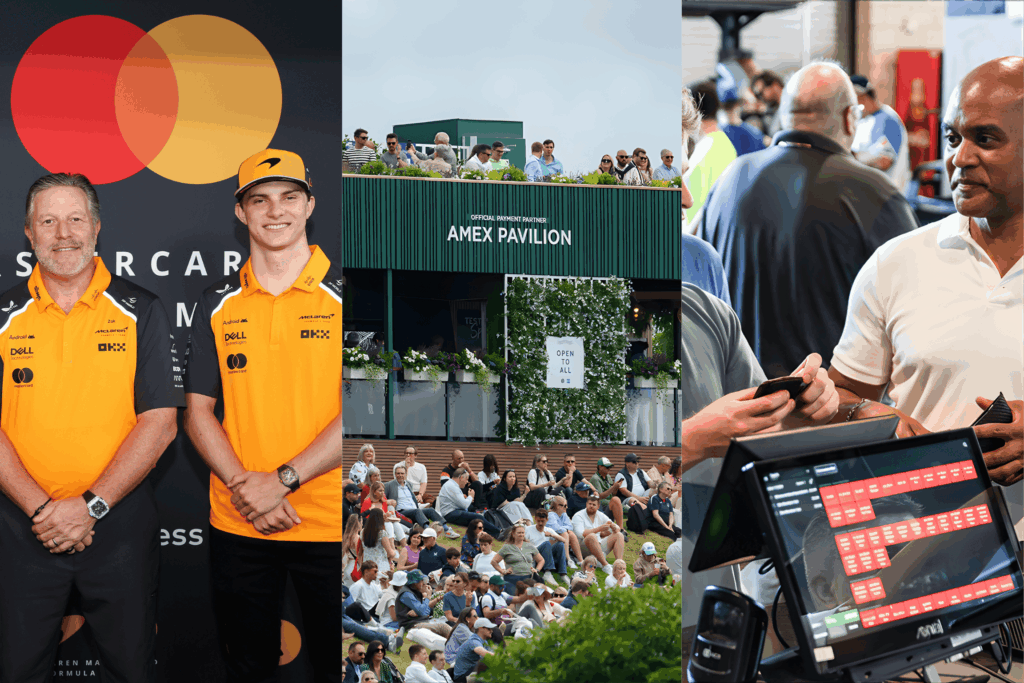
Photo credits: Mastercard, Wimbledon, Global Payments

  • Mastercard × McLaren Formula 1 Team 

One core role sponsorship plays for payment brands is reinforcing perceptions of trust and security at global scale. The partnership between Mastercard and McLaren Formula One Team illustrates this clearly. 

Estimated at approximately $100 million per year, the partnership is among the largest on the Formula One grid (Luscid). Its value lies in the environment it operates within. Formula One is defined by precision engineering, operational discipline, and risk management under pressure. These attributes align closely with the expectations consumers place on payment brands. 

Data from the Luscid platform shows the partnership reaching 29 million highly targeted customers, while delivering 3.8× stronger positive association with trust and 9.3× stronger positive association with security compared to the average sports property. These metrics indicate that the partnership reinforces foundational brand signals that matter before any transaction occurs. 

In this context, sponsorship functions as a reinforcement mechanism. It strengthens confidence, creating conditions where consumers feel comfortable relying on the brand across markets and situations. 

  • Global Payments × Stadiums and venues 

A second role sponsorship plays is operational rather than symbolic. Global Payments provides commerce and payment technology across 160+ stadiums and entertainment venues worldwide, supporting ticketing, concessions, and in-venue point-of-sale systems (Global Payments). 

Live events concentrate transactions into short timeframes where speed, reliability, and ease of use directly affect the fan experience. In these settings, payment brands are remembered through performance rather than messaging.  

Luscid data helps explain why this model is effective. Live Events index at 177.3 on the Luscid platform, making them 77.3% more effective than the average of 78 genres at delivering partnership outcomes for the payments sector. Additionally, 35% of Global Payments’ audience shows an active interest in Live Events, indicating strong alignment between the brand’s audience and the environment. 

Here, sponsorship integrates directly into behaviour. Usage becomes habitual because the payment solution is embedded where transactions naturally occur. 

  • American Express × Live sports and entertainment 

A third sponsorship role focuses on differentiation through access. American Express has consistently structured its sports and entertainment partnerships around exclusive experiences, including ticket presales, reserved seating, hospitality, and cardmember-only events (American Express). 

This approach shifts the value equation. The payment method itself becomes a gateway rather than a utility. Consumers choose the brand because it unlocks opportunities that are otherwise unavailable. 

Luscid analysis shows where this strategy performs most strongly. When Event or Experience is the primary activation focus, Soccer, Basketball, and Tennis emerge as the most effective sports. Live Events rank first overall, with Rock Music ranking fourth, reflecting sustained demand for premium, in-person experiences. 

In these environments, loyalty is driven by perceived privilege and access rather than convenience alone. 
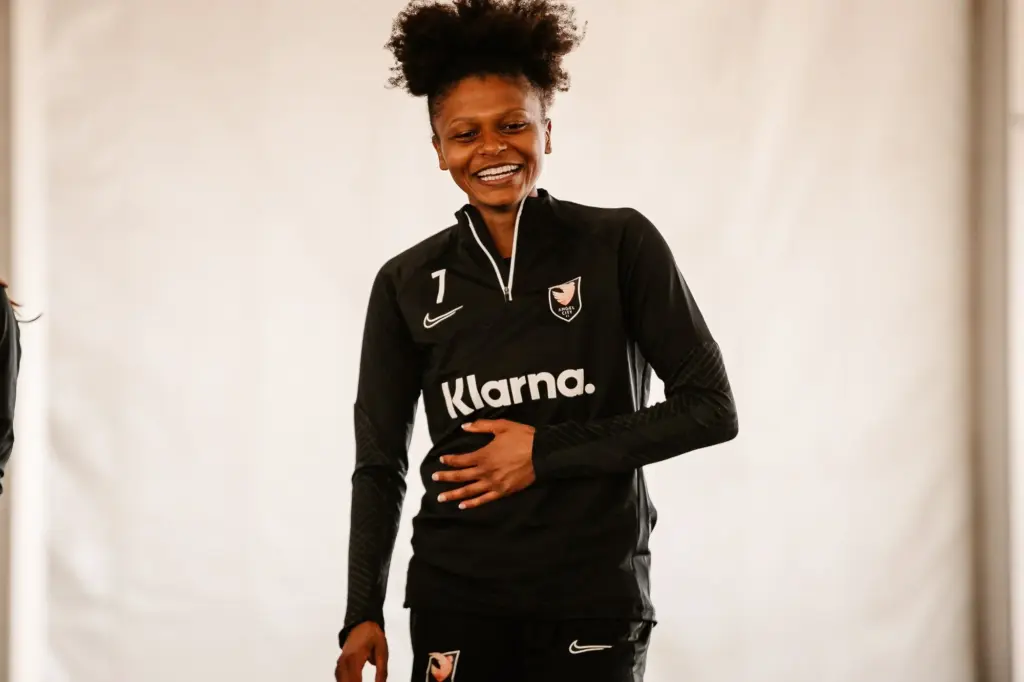
Photo credits: Angel City FC

Across these examples, a clear pattern emerges. Different properties support different business outcomes: 

  • Formula One creates a context where trust and reliability are reinforced while money moves across borders 
  • Stadiums and venues normalize everyday transactions through embedded infrastructure 
  • Live sports and entertainment create differentiation by linking payment methods to access 

Payment brands are selecting sponsorship environments based on how they support specific objectives within the customer journey. The decision is less about audience size and more about behavioural relevance. 

This evolution has implications for risk management. Large-scale sponsorship decisions, often exceeding $10 million, carry execution, alignment, and opportunity risk. Clarity about the role each partnership is meant to play reduces uncertainty before performance metrics appear. 

Knowing where trust is reinforced, when usage naturally follows, and which environments align with audience behaviour allows payment brands to structure partnerships more deliberately. The result is greater strategic coherence across markets and channels. 

Sponsorship in payments is increasingly defined by purpose rather than presence. The next phase is shaped by environments where consumers feel confident relying on a brand when it matters most. 

For payment brands operating at global scale, success depends on choosing partnerships that reinforce trust, support habitual usage, or unlock access in ways that align with their broader strategy.  

Sponsorship works better with clarity. 
Why Beauty Brands Should Be Exploring Sports Sponsorship

Beauty has conquered almost every cultural stage: red carpets, fashion weeks, TikTok trends, celebrity routines. But there’s one arena many brands still hesitate to enter: sport. 

Nowadays, the beauty and sports industries are increasingly intersecting, and smart cosmetic brands are getting in the game. It is not just about celebrity athletes promoting skincare on social media. It’s about strategy, lifestyle alignment, and overlooked opportunities that speak directly to the modern consumer. 

And while some beauty brands are still on the sidelines, others are already capitalising on one of the fastest-growing and culturally rich marketing platforms available today. 

At Luscid, where we analyse nearly 3,000 sponsorship briefs a year, the shift is unmistakable: beauty has become one of the most under-leveraged yet high-potential categories in sport sponsorship. 

What’s fuelling this movement? 

 1. The rise of female participation and viewership 

From the WNBA to women’s football to the F1 Academy, female-led leagues are seeing record-breaking growth. The WNBA’s 2024 season averaged 1.19 million viewers on ESPN platforms — a 170% increase year-on-year (ESPN). On a global level, 50% of all WNBA fans are female (Luscid / GWI).  Meanwhile, the Formula 1 fan-base globally is also trending in a similar direction – with 34.3% of fans being women (Luscid / GWI) 

These numbers illustrate: it’s not just “women watch sport” — the fan base is diversifying, growing, and becoming more valuable. These new communities represent empowerment, individuality, and self-expression – values beauty brands already own. 

 2. Athletes are becoming beauty influencers/ambassadors 

Modern athletes aren’t just competing, outside the track or stadium they’re creators, style icons, trend-setters. And brands are leveraging this to bridge sport and beauty meaningfully. Take Bianca Bustamante, a rising star in motorsport who partnered with Anastasia Beverly Hills, or Alex Albon representing CeraVe.  

According to research, sports sponsorships “drove an average 10% lift in purchase intent among the exposed fanbase.” (Nielsen Sports). 

Also, fans of women’s sports in general are 2.5 times more likely to purchase a brand / product that sponsors their favourite sports team or organisation (Luscid / GWI) 

 3. Beauty and sport are both lifestyle categories 

In 2025, beauty isn’t just “getting ready” — it’s daily performance, recovery, wellness, self-expression.  It’s no longer strange to see foundation in a gym bag or SPF in a tennis kit — it’s expected. And as wellness becomes mainstream, the lines between skincare, fitness, and performance are blurring. 

Sports sponsorship gives beauty brands a live, performance-based stage to prove claims, such as sweat-proof, heat-resistant, long-wear, where it matters. 

Photo credits: Charlotte Tilbury Beauty, La Roche-Posay, Neil Favila

Who’s already sponsoring? 

A growing group of beauty brands is already showing what’s possible in sport. e.l.f. is active across the NWSL, Tottenham Hotspur FC Women and the Billie Jean King Cup; Maybelline works with the WNBA, WWE and Naomi Osaka; NYX with Angel City FC; L’Oréal across Indian Wells, the X Games and Iga Świątek; and essie with the New York Liberty. 

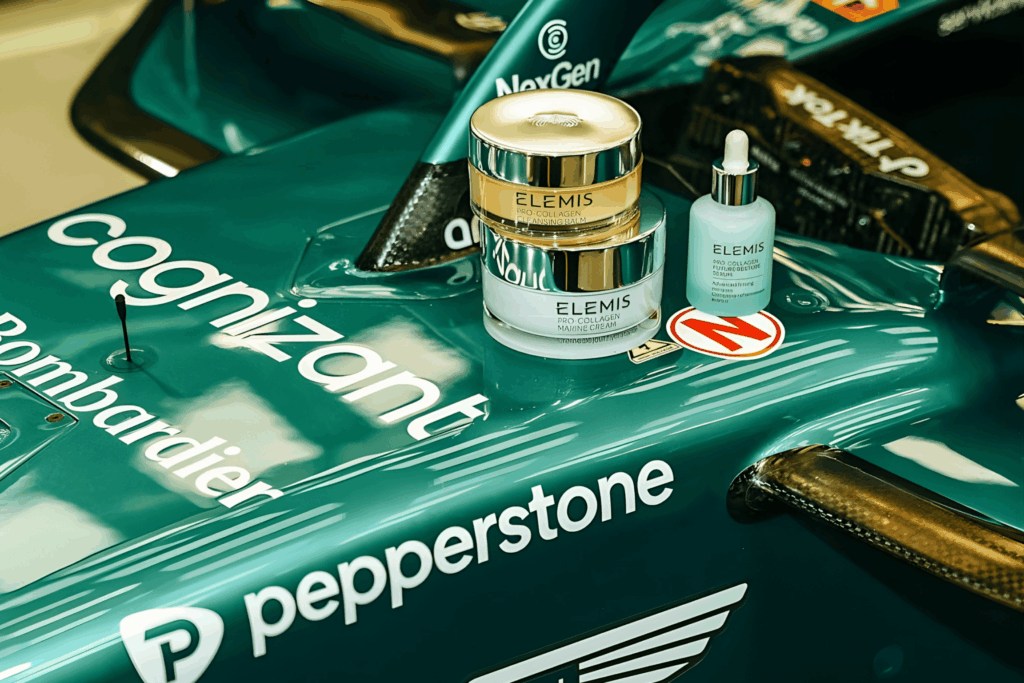
Luxury brands are moving too. Charlotte Tilbury has stepped into the F1 Academy, ELEMIS has partnered with Aston Martin’s Formula One Team, La Roche-Posay has built visibility across tennis and Formula 1, Laneige has entered esports with T1, and Fenty Beauty continues to expand with the New York Liberty. 

What’s striking is how diverse these moves already are — spanning leagues, athletes, esports, motorsport and major global events. Yet even with this progress, the category remains one of the most under-served in sponsorship. 

Missed Opportunity – long-lasting makeup 

Brands invest millions developing sweat-proof, waterproof, heat-resistant formulas. So why aren’t more putting those claims to the test real-time, under pressure, in real performance conditions? 

For example, artistic swimming is built around water, performance, beauty, and athleticism. Yet, few cosmetic brands have leveraged this powerful platform. 

At Luscid, we see this gap not as a problem, but as a missed opportunity. 

Luscid’s strategic insights for beauty brands 

Luscid’s platform evaluates sports properties using brand values, audience fit, and budget. For beauty brands focused on values like creativity, confidence, affordability, and self-expression, a clear pattern emerges. 

Across our data, the strongest opportunities for affordable beauty brands sit within: 

  • Cycling – wellness-led, outdoors, gender-diverse, community-driven; 
  • Swimming – natural fit for long-wear and waterproof; 
  • Marathon & Running – huge participation base and credibility for endurance claims; 
  • Soccer – massive global scale with young, diverse fanbases; 
  • Athletics – high visibility in major global events and high-performance narratives ;

These sports offer the best alignment across demographics, media visibility, engagement potential, and brand storytelling opportunities. 

What about luxury brands? 

For high-end cosmetic brands, the opportunity lies not in scale but in selective, image-enhancing partnerships that speak to sophistication, exclusivity, and glamour.  

Based on Luscid data, the strongest opportunities appear in: 

  • Tennis – global prestige, elegant aesthetics, culturally rich fashion moments; 
  • Cycling – affluent, health-conscious audiences with strong lifestyle identity; 
  • Soccer – international reach with high-value hospitality environments; 
  • Winter Sports & Skiing – luxury travel, premium resort culture and high-spend audiences; 
  • Marathon & Endurance Events – wellness-led, performance-driven, strong brand credibility; 

These sports are known for elegance, affluent audiences, and premium hospitality offerings. 

Take tennis, for example: events like Wimbledon, the Monte-Carlo Masters, or the US Open blend high fashion with high performance, offering a perfect setting for on-site activations, VIP gifting lounges, or premium skincare refresh bars. A luxury skincare brand could sponsor a player known for their grace and style or even create a custom product drop tied to a Grand Slam moment.  

‎Photo credits: Aston Martin Aramco Formula One Team

A brand already acting on this opportunity: ELEMIS × Aston Martin 

The best evidence of how luxury beauty in sport is evolving comes straight from one of Luscid’s platform advocates: ELEMIS. 

“Formula 1 has undergone a remarkable transformation; the sport has become a cultural phenomenon. At ELEMIS, we saw this evolution not just as a moment in sport, but as a meaningful opportunity. As a brand rooted in innovation and purpose, we are inspired to celebrate the growing female fanbase and champion the remarkable women breaking barriers within the world of F1, on and off the track. 

Our approach is empowering and truly listening to our communities. It’s showing up where our audiences are and reflecting their passions and interests. Just as F1 is redefining what it means to be a fan, ELEMIS is redefining how and where beauty and skincare belongs.” 
— Amy Mansell, ELEMIS Global Partnerships Director 

ELEMIS’ perspective reflects what our data shows: luxury beauty in sport isn’t a trend — it’s a brand-building strategy grounded in culture, audience relevance and premium experience design. 

Why act now? 

Beauty consumers are increasingly sports-engaged – quietly, but massively. In fact, 82% of Gen Z sports fans identify as beauty enthusiasts (GWI). Beauty buyers are already in the sports audience — it’s simply a connection the beauty industry hasn’t fully explored yet. 

And the audiences inside sport aren’t just wide, they’re valuable. Sports fans are more brand-loyal than the general population. Nielsen shows that 67% of global football fans are more likely to prefer brands that sponsor their favourite events, compared to 54% of the general population. 

This brand affinity extends to premium segments too: 47% of US sports enthusiasts are willing to pay more for luxury brands, compared to 28% of the general population (YouGov). For beauty brands, especially skincare and luxury cosmetics, this combination of high engagement and high willingness to spend is powerful. 

At the same time, the economics of sponsorship are shifting fast. McKinsey reports that growing sponsorship momentum expanded the women’s sports market by more than $250 million in 2024. As demand rises, sports sponsorship assets are becoming more expensive, and early movers tend to secure better visibility, stronger storytelling territory, and more favourable commercial terms. 

The performance upside is already clear: sports sponsorship recall in women’s sport shows 20% higher brand recall rates and 2x the social media engagement rates per post versus men’s sport (Nielsen, Parity).  

The momentum is building. As the landscape evolves, prime opportunities get quickly claimed, assets get pricier, and the authentic vantage gets harder to own. 

Consumers want authenticity. They crave proof that “24h-wear” means something. What better testing ground than a triathlon or a swimming event? What better backdrop than a Grand Slam or a race weekend? 

Where Luscid fits in 

For beauty brands debating whether to play in sport, sponsorship does not have to be a gut feel. 

Luscid’s platform analyses thousands of sponsorship properties based on brand values, target audience, marketing goals, and budget – helping brands identify where they can show up authentically, creatively, and with impact

The opportunity is here. The audience is ready. 
The only question is which beauty brands will move first, and which will be catching up. 

Luscid’s Technology: Saving Time and Driving Accuracy in Sponsorship Evaluation

Accor, a world-renowned hospitality leader, wanted a precise, efficient, and transparent way to make sponsorship decisions—particularly as they prepared to shape a new five-year partnership strategy. They were the ideal partner to demonstrate how technology could address an industry-wide challenge.

As one of the most active players in global hospitality, Accor invests heavily in sponsorship, with Luscid data indicating annual rights spend in the nine-figure range. Their diverse portfolio includes 12 large-scale global properties such as venue and stadium naming rights, Roland Garros, SailGP, Paris Saint-Germain, New Zealand Cricket, and the Olympic Games.

At the start of 2023, Accor faced the need to evaluate several renewals and new opportunities with a level of accuracy and accountability that matched the scale of their investment. Like many large organizations, time, resources, and budget were critical factors in making this possible.

In mid-2022, Luscid conducted an internal research project to better understand the dynamics of traditional, human-led sponsorship consultancy. The findings showed that evaluating just one renewal option typically took around three weeks and cost brands between £25,000–£30,000.

For Accor, applying this model across the scope of evaluations needed would have meant 3–4 months of work, significant internal and external resources, and a people-time cost well into six figures. This is money that could otherwise be reinvested directly into sponsorship rights and activations—maximizing the chances of a stronger return on investment.

How FMCG Brands Can Thrive Despite UK HFSS Advertising Restrictions

Executive Summary

October 2025 marks a pivotal moment for UK FMCG brands. New regulations banning pre-9 pm TV advertising and restricting digital promotion will significantly disrupt how food and beverage companies engage consumers. These changes demand more than tactical tweaks, they require a fundamental shift in brand visibility strategy.

In response, Luscid and The Value Xchange have joined forces to offer brands clarity and confidence as they navigate the UK’s HFSS advertising restrictions. Luscid delivers insight-led intelligence to help brands identify sponsorship opportunities that are both compliant and commercially effective. The Value Xchange brings decades of experience in media, sports & entertainment partnerships to ensure those opportunities translate into measurable impact. Together, they provide marketers with the tools and expertise needed to adapt responsibly and effectively in a changing landscape.

This whitepaper provides FMCG marketers with evidence-based guidance on how partnership marketing can support long-term brand equity, aligning with both the letter and spirit of the legislation, while maintaining meaningful connections with the right audiences.

Understanding the Regulatory Landscape

The UK’s new regulations tackle a genuine public health concern. With one in eight children aged 2-10 now classified as obese, the government has taken decisive action to limit exposure to HFSS advertising. The cornerstone of these measures is the watershed ban on television advertising before 9 pm, alongside additional restrictions on digital platforms. A change is expected to remove approximately £200 million in annual TV advertising spend from the FMCG sector.

For many brands, this affects not just where they show up, but how they remain visible at all. This represents more than a simple shift in tactics; it demands a fundamental re-evaluation of how HFSS brands build and sustain visibility in a changing media and regulatory landscape.

The End of an Era in FMCG Marketing

For decades, FMCG marketers have mastered the balance of reach and relevance, building brand equity through the scale of broadcast. Household names like Coco Pops and Walkers embedded themselves in cultural memory, driven by high-frequency TV and digitally targeted reinforcement. Often via high-impact, appointment-to-view TV moments.

This strategy enabled marketers to:

  • Achieve mass visibility through broadcast
  • Layer in segmentation via digital and social
  • Create responsive, multi-format campaigns with agility
  • Cultivate brand communities, particularly among families and younger demographics

There’s no question that FMCG marketers have historically been right to focus their budgets on broadcast. Seven of the top ten genres identified in Luscid’s FMCG report, including Comedy, Drama, Films on TV, Documentaries, Entertainment Shows, and Reality Television, have consistently delivered both the scale and agility needed to drive campaign effectiveness.

The dominance of these formats reflects a tried-and-tested strategy: pairing high-frequency products with high-frequency viewing habits, particularly within family and household environments where purchasing decisions are shaped.

However, with the introduction of the new HFSS restrictions, this well-established model is being fundamentally dismantled. The traditional broadcast, at scale and frequency brands have relied upon, is no longer a viable primary approach.

Strategic Partnerships: A Shift in Brand Visibility

FMCG brands now face the challenge of maintaining creative, resonant messaging within new regulatory boundaries. One strategic direction for brands is to develop thoughtfully designed partnerships that create meaningful consumer connections while fully embracing both the letter and spirit of the new regulations.

As the marketing landscape evolves, partnership opportunities present a strategic pathway forward that enables brands to connect authentically with their customers while upholding the highest standards of responsibility that both consumers and regulators expect. Effective sports and entertainment partnerships allow brands to:

  • Reach established audience segments through cultural and community touchpoints
  • Build trust through association with positive activities
  • Showcase brand values rather than focus on product attributes through storytelling

Luscid’s proprietary partnership selection data model, alongside The Value Xchange’s decades of experience in delivering winning partnerships across the Sport & Entertainment ecosystem helps marketers navigate these opportunities through rigorous data analysis and strategic alignment.

What Our Research Reveals

Using Luscid’s proprietary platform, we evaluated 89 potential partnership environments against an illustrative FMCG brand brief, designed to mirror real-world marketing objectives under the new regulatory landscape. The report was built around the following criteria:

  • A mid-market target audience, demonstrating active purchase behaviour across categories including snack foods, confectionery and chocolate, ice cream, soft drinks, candy and biscuits.
  • A socially active, family-oriented consumer profile, classified through the Luscid platform as Mobile Dependent, Heavy Social media Users, with a strong representation among Family Shoppers and Active Parents.
  • A requirement for broadcast-scale audience reach, supported by complementary digital impressions.
  • An emphasis on positive association with brand values aligned to spirit of the HFSS regulatory changes, including Health and Wellbeing, Community and Charity, Education and Diversity and Equality.

This approach ensured that the partnership environments through Luscid’s analysis not only deliver on audience reach and engagement but also reflect responsible brand alignment within the evolving public health landscape.

Several findings stand out for FMCG marketers: 

  • Football (Soccer) delivers exceptional visibility, scoring 117.4% above average on the Luscid Broadcast Visibility Index. It also performs remarkably well on ethical messaging, with a 68.7% higher resonance than average, on responsibility and wellbeing metrics.
  • Marathon events provide authentic health associations, creating natural environments for brands to emphasise purpose rather than products, though it falls back on Broadcast Visibility, with an index score 17% weaker than the average of 89 passion points that we evaluated.
  • Rugby Union (59.5% above average), Athletics, Triathlon, Netball, and Cycling offer strong combinations of reach and values alignment, especially valuable for brands targeting families. 
  • Live experiences generate deeper engagement, with an average CSR engagement index of 54.3%, creating more meaningful connections than traditional advertising.

Notably, these environments remain relatively untapped by HFSS brands. Just 1% of UK football sponsorship revenue comes from HFSS categories, compared to their significant presence in traditional advertising channels.

Activating with Integrity: Evolving FMCG Strategy in a New Era

For FMCG marketing leaders navigating the HFSS regulatory landscape, this moment represents more than a compliance challenge, it’s a fundamental shift in how brands connect with consumers. As traditional broadcast and digital avenues become restricted, the industry still has options, but needs to embrace a strategic evolution in approach.

Luscid’s comprehensive analysis provides valuable direction. Football, for instance, offers great visibility, but more impressively, it indexes 68.7% higher on responsibility and wellbeing metrics. Marathons, community sports and live experiences also represent partnership territories where brand presence can be both effective and ethically sound.

Rather than viewing these environments as mere replacements for lost advertising channels, brands could capture competitive advantages by building brand equity through purposeful engagement:

  • Audience understanding drives commercial results: Robust audience insights help brands identify environments where their audience naturally gathers, ensuring partnerships reach the right people with minimal wastage through contexts that resonate with their existing behaviours and interests.
  • Value alignment delivers business growth: The most effective partnerships are those where brands genuinely contribute to communities, wellbeing initiatives, or cultural moments, creating meaningful stories and connections that translate to measurable increases in consideration and purchase intent, particularly among value-conscious consumers.
  • Holistic brand experience integration amplifies ROI: These strategic relationships deliver maximum impact when woven throughout the consumer journey, from retail storytelling and product development to community engagement and corporate responsibility initiatives, creating multiple touchpoints that reinforce brand positioning while driving commercial objectives.
  • Purpose-driven performance metrics demonstrate success: Leading FMCG brands are already measuring success through indicators like trust building, community impact, and brand purpose fulfilment, complementing traditional metrics with measures that demonstrate long-term business value creation.
  • Driving scale beyond the partnership via paid amplification: Constant advancements in digital audience targeting and content distribution allow brands to take their partnership story to a wider audience. And powerful content can drive increases in organic visibility across their online presence.

In this context, strategic partnerships represent the natural evolution of marketing itself, an approach that delivers deeper consumer connections and stronger business results by focusing on meaningful engagement rather than interruptive messaging. By embracing this approach, brands could find that they can confidently activate in spaces that align with both regulatory requirements and their business ambitions, often discovering more impactful connections than traditional advertising previously delivered.

Leading Through Transition

The forthcoming HFSS restrictions represent more than regulatory hurdles; they signal changing expectations about how food and beverage brands engage with society.

The brands that will thrive won’t be those searching for regulatory loopholes. They’ll be organisations that embrace this new landscape, developing partnerships that build lasting brand equity while respecting public health priorities.

This transition isn’t easy. It requires new capabilities, metrics, and organisational structures. But it also offers a genuine opportunity to create more meaningful consumer connections and demonstrate authentic corporate citizenship.

Once the transitions are navigated, partnerships and sponsorships, when set up with clear objectives and grounded in data, represent one of the most versatile and credible tools in the modern marketing mix. Far beyond logo placement or short-term visibility, they can influence every stage of the customer journey: from driving brand awareness and shaping perception to influencing consideration, trial, and loyalty.

When aligned with brand values and consumer interests, partnerships can strengthen corporate reputation, fuel content strategies, support ESG commitments, and create distinctive consumer experiences. Crucially, they are not speculative or intangible; with the right planning, measurement frameworks and activation strategies, partnerships become accountable marketing investments, capable of delivering both immediate impact and sustainable brand value.

For further information or to discuss the findings in more detail, please contact:

Luscid: Damien Gillman, CSO and Co-Founder, damien.gillman@luscid.com, Charlotte Burrows, Marketing Manager: charlotte.burrows@luscid.com

The Value Xchange: Oliver Rockett, Partnerships Manager: oliver@thevaluexchange.co.uk

About Luscid

Launched in 2022, Luscid is a Martech platform purpose-built to transform the sponsorship selection process. By combining 15 years of data across 500,000 historic and live partnerships in over 80 countries, Luscid helps brands deploy marketing budgets through clear, data-driven insights. The platform delivers an agnostic, objective view of the global sponsorship landscape, enabling marketers to identify the right opportunities, reduce inefficiencies, and stay ahead of the competition.

About The Value Xchange

The Value Xchange is a sports, media and entertainment marketing agency that creates partnerships with lasting impact for fans, sponsors, and rights holders. With roots in media and a heritage in sponsorship dating back to the mid-1990s, its team brings deep industry experience and a commitment to building partnerships that matter.

The agency works across sectors to help brands navigate a changing media and cultural landscape. By combining strategic thinking with data-driven tools like Luscid, The Value Xchange supports more informed decision-making and ensures partnerships align with audience values, brand purpose, and long-term business goals.

The Airline Sponsorship Boom: Where Can Brands Lead, Not Just Compete?

Airlines are investing more in soccer and other mainstream sports than ever, but is it driving standout results or getting lost in the noise?

In 2024, airline sponsorship reached new highs. With 296 active deals and 152 new ones already signed (GlobalData). Airline brands are raising their profile across sport partnership portfolios, driven by rights-owner promises of massive global reach, cultural relevance, and strategic association.

Football alone accounts for over $692 million (GlobalData) of that spend. While it’s the most invested category, the opportunity to stand out still exists, thanks to relatively low sponsorship clutter, at just 2.7% on the Luscid platform. There appears to be a massive bias to the biggest properties, with plenty of smaller rights owners not seeing a slice of this substantial pie.

Major airline brands like Emirates, Qatar Airways, and Malaysia Airlines have signed high-profile, multi-year sponsorships in recent years; those deals are increasingly spread across multiple sports, including basketball, tennis, and more. And they’re not alone. From Formula 1 to Baseball, airline brands have snapped up deals across the tier 1 properties, with the unfortunate outcome of creating a saturated stage of familiar logos, all competing for attention, differentiation and relevance.

This is where the visibility challenge begins.

Visibility Isn’t One-Size-Fits-All

As we’ve noted, many airline brands are turning to the same high-profile team-based properties for impact. In fact, 46% of the sector’s total annual sports sponsorship spend goes to specific teams (GlobalData). 

Soccer dominates investment, and while clutter is officially low, the competition for attention is high within the biggest properties in the most popular sports, and finding cut-through requires great synergy, both to drive real-world business results and we suspect increasingly to justify the massive fees.

Where is the investment and What Does It Mean for Visibility?

Luscid’s proprietary technology reveals where airline sponsorship activity is concentrated, and where opportunities remain to potentially go a different way and cast a new path. 

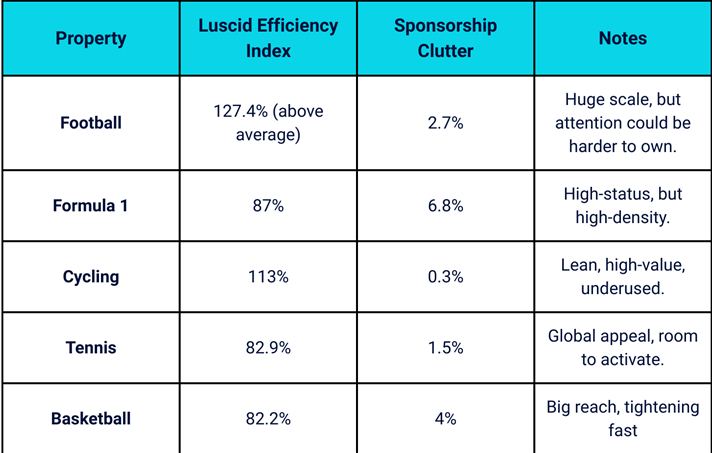
Here’s how key sports stack up in terms of visibility, efficiency and brand clutter:

Note: Formula E and Winter Sports are also emerging as valuable options, with 0-5% clutter and growing visibility.

The data reveals both saturation and standout potential, depending on where you look.

Not Just the Size of the Stage, but the Number of Voices On It

Each of these properties offers different trade-offs between scale, brand fit, and clutter. While F1 and major soccer teams deliver vast audiences and premium equity, the cost is increased competition to gain attention.

Not all airlines are the same. A global long-haul carrier looking to build prestige might embrace that visibility battle. A regional or domestic airline with tighter budgets and different goals? They need precision, not noise.

Brands looking to lead should consider not just how big the stage is, but how many other voices are shouting on it.

That’s where underutilised spaces like cycling (average partnership deal size $500k) and winter sports ($260k) stand out. These are high-efficiency, lower-clutter platforms that align with typical airline brand values and target audience demographics. These environments allow opportunities for brands to command attention and lead the conversation from likely highly grateful rights-owners. The question arises if each property delivers the raw scale required, but a combination of the properties mitigates this concern, although it may require more effort to manage than a global giant alone.

Luscid’s Take: Where Visibility Gets Smarter

With $548 million worth of airline sponsorships that expired in 2024, this is a pivotal moment for strategic resets.

The strategy should match and reflect the objectives, and that’s exactly what Luscid is designed to help with:

  • Don’t just follow the crowd. Soccer, Motorsport and Basketball are packed with airline deals, but that doesn’t mean they’re the wrong move. If the aim is to defend market share or block a competitor, that might be exactly where they need to be.
  • Find more ownable platforms. Sports like Athletics, Winter Sports and Tennis offer premium value with significantly more breathing room.
  • Make visibility the strategy. Invest where your brand isn’t one of many, it’s the one that leads.
  • Back clarity over clutter. A smaller stage with fewer logos can deliver more cut-through and tangible value than even the biggest events in the world.

What This Looks Like in Action

Take a challenger long-haul airline launching new routes between Eastern Europe and Asia. Awareness is low. Budgets are tight. Every decision needs to work harder.

Using Luscid, they can:

  • Identify high-impact and efficient properties like cycling and winter sports, where competition is very low and alignment and impact are still high.
  • Understand where competitors are most active and also where your brand has room to lead and own space.
  • Select sponsorships with the strongest potential for maximum efficiency and impact.

The result? A high-impact investment aligned to the brand values and objectives, engineered for visibility and brand advantage.

Ready to Rethink Your Sponsorship Strategy?

The breakthrough doesn’t come from spending more. It comes from knowing where each brand can lead a new flight path, finding the properties that align with key brand values and where the opportunity for genuine cut-through with valuable audiences is highest.

Want to know where to go next and how to outpace the competition when you do? Let’s talk. Luscid turns noisy sponsorship decisions into clear brand advantages.

12.5% of F1 Sponsorship Deals Are Now from the Tech Industry. Is the Grid Too Crowded?

Technology brands have flooded into F1 in recent years, investing huge amounts of money across the grid, but with so many fighting for space and impact, are they getting the visibility and cut through they would expect from such large investments?

Lucid’s proprietary platform allows us to reveal and then dig into the fact that 12.5% of all live deals come from the tech sector, and this number is growing. Luscid’s technology tells us firstly that these are highly efficient investments and there is a clear fit between the brand values of the multitude of cybersecurity, enterprise software and fintech brands and Formula 1’s strength in speed, innovation, performance and data-driven excellence.

However, the competition is fiercer than ever. With numerous sponsors spread across just 10 teams, visibility is shrinking, and brands are paying more for less impact. As the grid becomes more crowded, brands need to think very hard about where and how they invest to ensure their sponsorship delivers impact and efficiency.

The F1 Tech Sponsorship Boom

F1 and tech brands are a natural match. The sport is built on cutting-edge engineering, real-time analytics, and high-performance innovation, which are exactly the attributes tech companies want to be known for.

It’s no surprise that F1 now ranks as the second-best option for tech partnerships among 89 sports and entertainment properties, scoring 87.8% on our partnership suitability index, trailing only soccer at 91.8%.

As more tech brands flood the space, the battle for visibility is only getting tougher, making it harder for sponsors to justify their investment.

Why tech brands are drawn to F1

Fan perception data shows that F1 outperforms other sports in key areas that align directly with tech brand values:

  • Innovation: 113.3% stronger than average, with fans seeing F1 as the home of cutting-edge technology.
  • Intelligence: 114.2% stronger than average, positioning F1 as a showcase of strategy, engineering brilliance and precision.
  • Data-driven performance: 67.6% stronger than average, reinforcing F1 as the ultimate sport for analytics, AI, and performance-led branding.

In addition, F1 is a ‘safe space’ for tech leaders. The hospitality is world renowned, and the popularity in key markets and with key demographics is beyond question at this point. Dare we even mention ‘Tech Bro FOMO’ and the ability for the business’s leadership to sip champagne in some of the most exclusive sporting venues on the planet?

The Challenge: Too many tech brands, not enough space?

The tech sector’s collaboration with F1 has created some real challenges:

  • Diminishing visibility: As sponsorship saturation increases, individual brand recognition is getting harder to achieve. With a growing number of similar logos fighting for space, even major sponsors risk being overlooked.
  • Category blur: With so many tech brands in F1, differentiation is becoming increasingly difficult. If you’re investing here, standing out must be the priority.
  • ROI pressure: With marketing budgets under more scrutiny than ever, sponsorship investments must go beyond brand awareness and deliver measurable impact.

F1’s prestige and global reach make it an attractive sponsorship platform. However, when every brand follows the same strategy, differentiation becomes the real challenge.

Where else could sponsors look?

F1 remains a premium sponsorship space, but there are alternative routes to consider, places where they can own more visibility, dominate messaging, and maximise ROI. Our data identified three emerging opportunities with strong tech-brand alignment and less market saturation:

  • Cycling: Just 5.3% sponsorship clutter, giving you more space to dominate activations.
  • Golf: A premium, high-net-worth audience with only 3.3% sponsorship clutter, making it a prime strategic growth market.
  • Tennis: A global, innovation-driven sport with exceptionally low 1.5%, a genuine first-mover advantage.

These alternative sponsorship opportunities offer strong alignment for brands looking to achieve real visibility before the competition catches up.

Where do F1 sponsors Go From Here?

The F1 sponsorship roster is growing faster than the sport itself, making it harder for technology brands especially to achieve meaningful visibility, cut through and ultimately ROI.

Every brand is looking to maximise their investment, the key is strategic alignment. Finding the right sport or team that not only reflects their brand values, ambitions and budget but also ensure they actually engage their future customers and achieve stand out positioning, F1 may be perfect for some, but Luscid’s data also shows us that there are other properties that make more sense for many of the brands investing their millions.

Sponsorship decision making is evolving, thankfully. Using deep data in this process is becoming business critical, especially in F1. Want to discover how Luscid’s data driven insights can help you make better investments drop us a line, we’d love to chat.